
Planning to stay in the Philippines long-term? There are several ways foreigners can apply for permanent residency depending on their purpose of stay, nationality, and eligibility. Permanent residency in the Philippines allows qualified foreign nationals to live in the country long-term through specific visa pathways, including family-based residency, retirement visas, and other immigration options. While marriage to a Filipino citizen is one possible route, it is not the only way to become a legal resident.
Requirements can vary depending on the visa type, but applicants are often asked to submit supporting documents, pay government fees, and complete immigration processing with the Bureau of Immigration

Immigrant Visas (Permanent Resident Visas)
To get an immigrant visa, you must be one of the following:
- A child born abroad with a Filipino Mother – those born outside of the country during a temporary visit of the mother abroad
- A child born after Issuance of Immigrant Visa of Accompanying Parent – if the parent had an immigrant visa before the child’s birth
- Immigrant Visa
- by marriage – with a valid marriage to a Filipino Citizen
- Immigrant’s Dependents – those dependent single children and spouses of an immigrant visa or temporary resident visa holder
- Permanent Resident Visa for:
- Amendment to Permanent Non-Quota Immigrant Visa by Marriage
- Chinese National Married to Filipino Citizen
- Filipino Veterans and Dependents – Filipino veterans of WW2 who acquired American citizenship; including their spouses, and single children who are American Citizens and residing abroad
- Returning Filipino Citizen – natural-born Filipino citizens who have naturalized abroad and are returning for permanent residence
- Returning Resident – those previously granted permanent residence returning from a temporary stay abroad
- Quota Visa – nationals whose countries have reciprocity agreements with the Philippines
Here are the different Immigrant Visas available:
- Quota Visa – Available to nationals from countries with reciprocity agreements with the Philippines.
- Marriage Visa – Requires a valid marriage certificate issued by the PSA.
- Immigrant’s Dependents – Single children and spouses dependent on immigrant visa holders.
- Returning Resident – For those previously granted permanent residency returning from temporary stays abroad.
Non-Immigrant Visas
Temporary Resident Visas for:
- Married to Filipino citizens – many can avail of the PRV, but those with no reciprocity agreement with the Philippines can get a TRV instead (which can be extended)
- Indian national married to a Filipino citizen, including dependents
Treaty Trader’s Visa
- An American, Japanese, or German Citizen that enters the country for trade or comer purposes
- The foreigner who is entering the country to develop or direct the operation of an enterprise
Student Visa
- Any foreign national aged 18 and above
- Taking up a course higher than a high school like in a university, seminary, or college
Employee Visa
- Any foreign national that engages in lawful occupation in the country
- Taking any form of compensation
Here are the different Nonimmigrant Visas available:
- Investor Visa – Intended for investors or retirees settling permanently or long-term in the Philippines.
- Employee Visa – For foreign nationals employed or engaged in work-related activities.
- Student Visa – For foreign nationals aged 18 and above enrolled in Philippine universities or colleges.
How to Get Your Philippine Residency (For Foreigners)
STEP 1
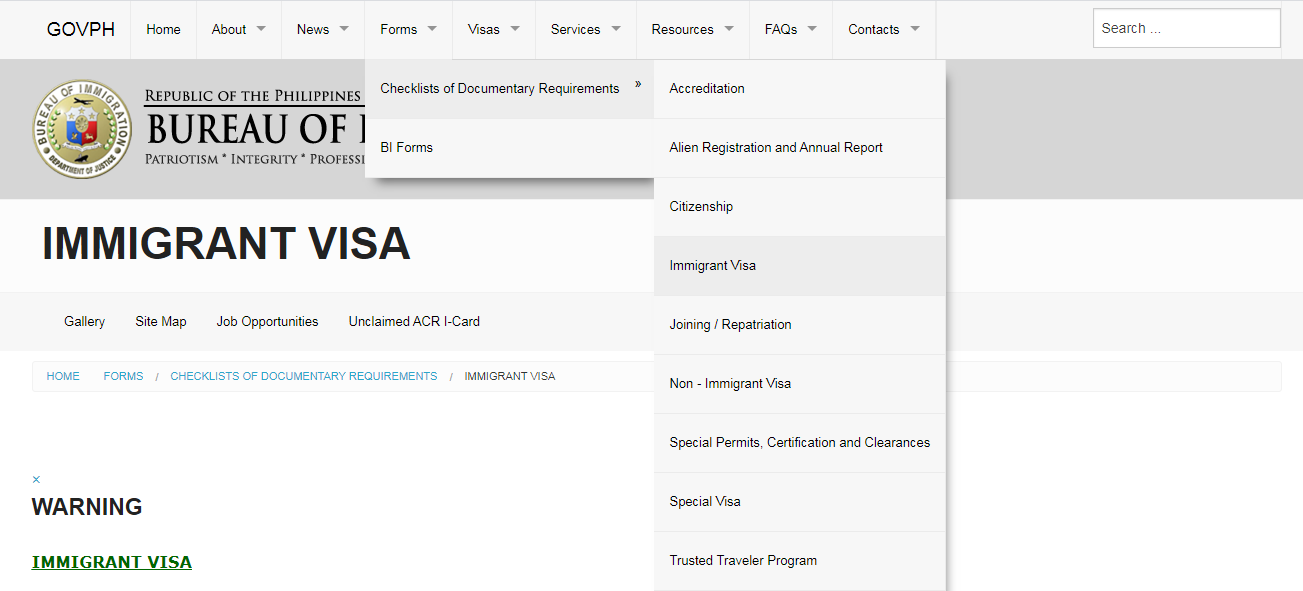
Visit the official Philippine Bureau of Immigration website to view the latest requirements. Complete online applications thoroughly.
Review the checklist specific to your visa category and compile the necessary documents, including your birth certificate and police clearance.
STEP 2
Schedule an appointment through the Bureau of Immigration’s online application system. Visit the Bureau of Immigration Main Office or a regional office that handles residency visas.
Submit your documents for initial screening at the Central Receiving Unit or designated frontline staff.
STEP 3
Obtain your order of payment slip, clearly detailing the required fees. Pay fees promptly, keep the official receipt, and receive your return appointment schedule.
STEP 4
Attend your scheduled hearing or interview as indicated in your appointment notice.
STEP 5
Prepare to obtain your Alien Certificate of Registration (ACR) I-Card. Ensure your documents are ready, as your biometrics – including photographs and fingerprints – will be captured.
STEP 6
Regularly check your application status online. Upon approval, submit your foreign passport to receive the visa sticker.
STEP 7
Collect your passport with the visa sticker and your ACR I-Card once notified.
Fees
The ACR I-Card currently costs USD 50.00 plus an additional PHP 500.00 processing fee.
However, the fees vary depending on visa type, category, duration, and applicant specifics (such as dependents).
Check the latest fee schedule on the Bureau of Immigration website for detailed information.
What to Know Before Applying for Permanent Residency in the Philippines
Applying for permanent residency in the Philippines can be a rewarding option for foreigners planning to live in the country long-term. While the requirements may vary depending on your visa type, preparing your documents carefully and understanding the application process ahead of time can make everything much smoother.
Before applying, always double-check the latest requirements, fees, and processing guidelines with the Philippine Bureau of Immigration, as policies may change over time. Having complete and accurate documents can help prevent delays and make the process easier from start to finish.
Whether you’re relocating for family, retirement, or a long-term stay, permanent residency in the Philippines can offer the opportunity to enjoy life in the country with greater stability and flexibility.
FAQ
Former Filipinos and their immediate family members can enjoy visa-free entry for up to one year under the Balikbayan privilege.
Yes, the Philippines issues a permanent residence visa (13(a) Non-Quota Immigrant Visa) to qualified non-Filipino spouses of Filipino citizens.
The Philippine Retirement Authority (PRA) typically processes and submits Special Resident Retiree’s Visa (SRRV) applications to the Bureau of Immigration within approximately one month, provided the applicant is physically present in the Philippines.
About the Writer

Hey, I’m Lyza! I once was a person who just imagined going to places “one day” but decided to pursue my dreams. My first travel abroad was in Japan, solo, last 2018, and fell in love with the journey since. I’m aiming to visit 10 countries before turning 30 and 2 new places in the Philippines every year. Besides traveling, I love organizing trips, photography, reading, and making new friends. Follow my adventures through my Instagram.